|
CELEBRATING THE WOMEN WHO SUSTAIN OUR FOOD SYSTEMS |
|
|---|
|
Wishing you a Happy New Year!
As we step into 2026, I am delighted that the United Nations has declared this year as the International Year of the Woman Farmer. Across India and the world, women play a key role in sustaining our agrifood systems through their knowledge, labour, and resilience. Yet, their contributions remain invisible.
According to the Food and Agriculture Organization (FAO), female farmers typically have less access to productive resources that are critical determinants of agricultural productivity – they are less likely to own land or livestock, adopt new technologies, use credit or other financial services. Women employees in the agricultural sector also get paid nearly 20% less than their male counterparts.
At MSSRF, we have always believed that empowering women farmers is fundamental to food and nutrition security, climate resilience and rural development. The IYWF 2026 calls on all of us to recognise women in their diverse workspaces—farmers, fishers, forest workers, processors, traders, agricultural scientists, traditional knowledge holders and entrepreneurs, and close the gender gaps that persist.
Let 2026 be a year of this renewed commitment where we collectively take steps to correct this imbalance. I wish everyone a meaningful and inspiring year ahead.
Dr. Soumya Swaminathan, Chairperson, MSSRF
|
|
|
 |
MSSRF’s Heat Stress Study Demands Gender-First Climate Action
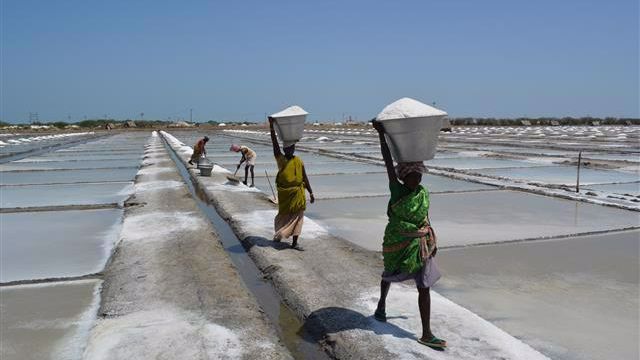
MSSRF has released its comprehensive mixed-methods report, The Impact of Heat on the Health of Women in India—A Cross-sectional Study, confirming that extreme heat is an urgent public health crisis disproportionately affecting women. The study reveals that heat amplifies structural inequities for women, particularly those from low-income and marginalized communities, whose experiences are often invisible in climate and health policies.
Findings from surveys across heat-prone districts in seven states show that 70% of women reported physical health symptoms such as fatigue and dizziness during peak summer months, alongside significant reproductive, menstrual, and mental health distress (with 66% reporting a mental health issue). The data also quantifies the social strain, linking heat vulnerability to increased household tensions, as 72% of women in high-vulnerability districts reported an increase in violence during the summer months.
The study was supported by the Gates Foundation, Karmanya, the CII Centre for Women Leadership, the Women’s Collective Forum, and the Alliance for Global Good – Gender Equity and Equality.
Read the full report here
Read the coverage of the report in
The Hindu, The Times of India, Your Story, Indian Express, South First
|
|
|---|
|
|
MSSRF Opens Applications for Mina Swaminathan Media Fellowship Spotlighting Women Farmers
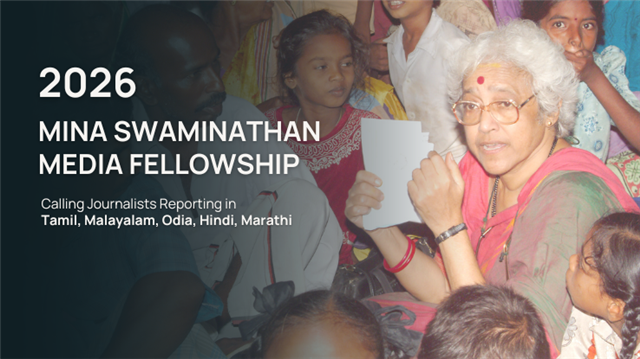
MSSRF has announced the fifth edition of the Mina Swaminathan Media Fellowship, inviting journalists to explore critical issues at the intersection of gender, sustainability, and development. Named after Mina Swaminathan - renowned educator, writer, and advocate for early childhood education, the fellowship highlights the transformative power of media in shaping narratives that bring grassroots realities into national discourse.
Aligned with the International Year of the Woman Farmer (IYWF), this edition invites journalists to tell stories of women who sustain our agri-food systems and the challenges they face. This year, the fellowship has expanded to include Marathi and Hindi journalists, in addition to Tamil, Odia, and Malayalam.
Applications for 2026 are now open.
Learn more details here.
|
|
|---|
|
|
First Batch of Paniya Tribe Youth Graduates from MSSRF’s Green Skills Programme |
|
|---|
|
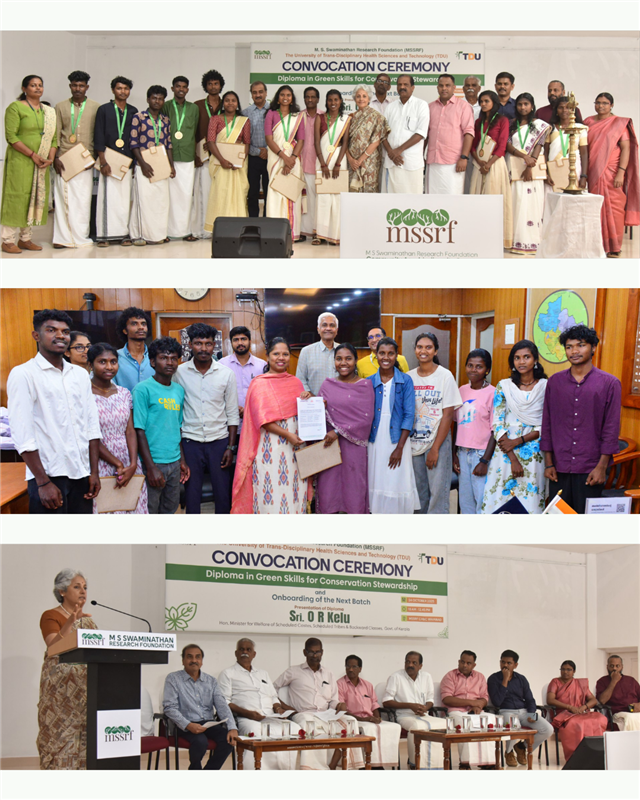
MSSRF marked a milestone in Wayanad as twelve young men and women from the Paniya tribal community graduated from its Green Skills for Conservation Stewardship program. The six-month residential program, developed in partnership with the TransDisciplinary University (TDU), Bengaluru, combines traditional ecological knowledge with scientific training. MSSRF plans to scale up the programme and build a recruitment database to link graduates with market opportunities, ensuring sustainable livelihoods for tribal youth.
|
|
|
|
|
Parasitic Plant Presumed Extinct Rediscovered in Wayanad After 175 Years |
|
|---|
|
A flowering root-parasitic plant, long believed to be extinct, has been rediscovered in the Thollayiram area of Wayanad in Kerala after more than 175 years. The species has been identified as Campbellia aurantiaca, a member of the Orobanchaceae family. Mr. Salim Pichan, a parataxonomist and Senior Technical Assistant at MSSRF, rediscovered it at a site less than five kilometers from the landslide-devastated Chooralmala and Mundakkai, underscoring the critical need for conservation in the Western Ghats' ecologically sensitive regions.
This rediscovery has been published in the Kew Bulletin, the official journal of the Royal Botanic Gardens, Springer Nature.
Read more here
|
|
|
|
|
Spotlighting Opportunity Crops at Global Crop Diversity Day 2025 |
|
|---|
|
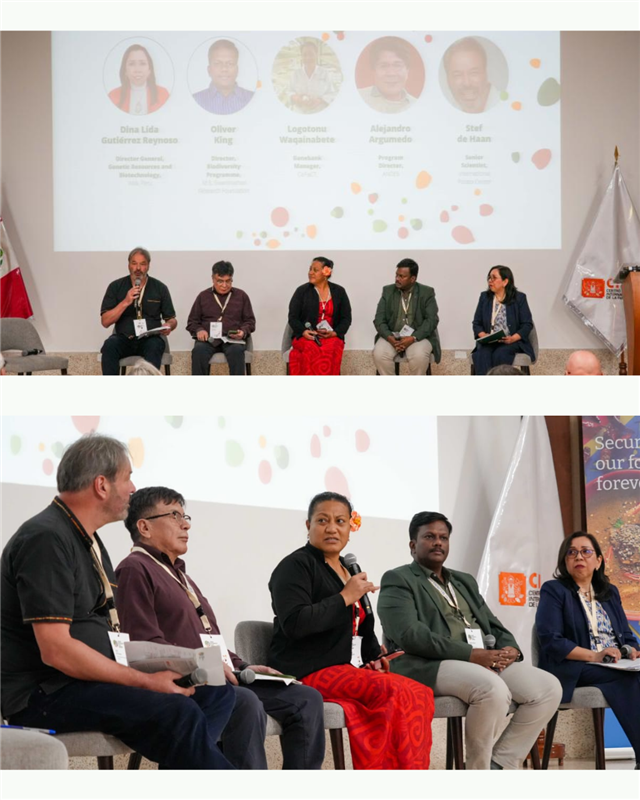 |
The Crop Trust, the International Treaty on Plant Genetic Resources for Food and Agriculture, and the International Potato Center jointly organised the second Global Crop Diversity Day on 21 November 2025 in Lima, Peru themed 'Preserving for Tomorrow: Innovative Solutions to Strengthen the Global Gene Bank System.'
As part of the panel discussion, ‘Diversifying Production Systems for Resilience and Food Security: The Role of Opportunity Crops’, Dr. Israel Oliver King, Director, Biodiversity, MSSRF, highlighted the institution's approach of blending traditional knowledge with modern science to promote neglected and underutilised crops, now popularly known as opportunity crops. Drawing on work with tribal communities in Odisha, Kerala and Tamil Nadu, he highlighted small millets, tubers, and traditional legumes in the Western and Eastern Ghats, noting that fragile seed systems, limited technology access and market linkages constrain adoption—gaps MSSRF is addressing through long-term collaborations with farmers, researchers, and policymakers. |
|
|
|
|
Advancing Farmers’ Rights in India |
|
|---|
|
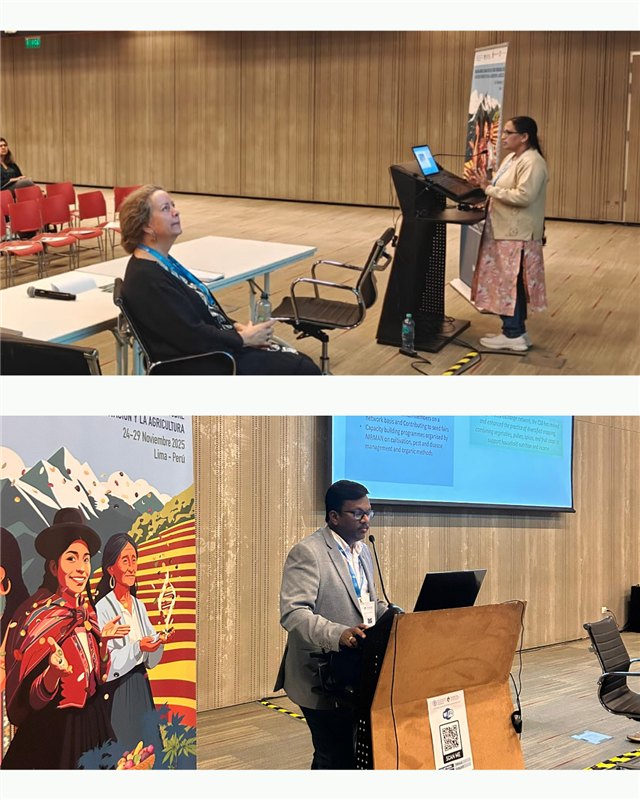 |
At a side event during the 11th Session of the Governing Body of the International Treaty on Plant Genetic Resources for Food and Agriculture in Lima, Peru, panelists discussed progress in advancing farmers’ rights in India. The panel featured Dr. Rengalakshmi R and Dr. Israel Oliver King (MSSRF), alongside Dr. Regine Andersen of Fridtjof Nansen Institute, Norway, Mr. Ajeet Sahu, Joint Secretary, Ministry of Agriculture and Farmers’ Welfare, Government of India (GoI), and Dr. Trilochan Mohapatra, Chairperson, Protection of Plant Varieties and Farmers’ Rights Authority (PPVFRA), GoI.
Discussions focused on operationalising the PPVFRA to recognise and enable farmers’ rights, integrating farmers’ varieties into the national seed system, and providing financial support for on-farm conservation through community seed banks and custodian farmers. Key insights from the DIVERSIFARM-India project—implemented by FNI and MSSRF with support from the Royal Norwegian Embassy, New Delhi— highlighted progress on mapping community seed banks (CSBs), the development of an Atlas of CSBs, and critical success factors for their sustainable and gender-responsive functioning.
|
|
|
|
|
STRENGTHENING PARTNERSHIPS |
|
|---|
|
MSSRF Signs MoU with Government of Maharashtra
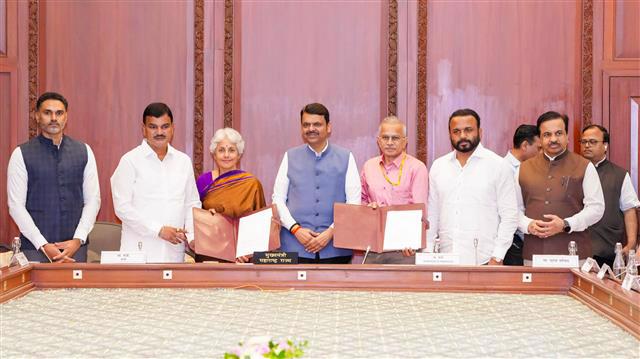
MSSRF has signed a Memorandum of Understanding (MoU) with the Government of Maharashtra to strengthen sustainable agriculture, nutrition security, and gender justice across the state. This landmark collaboration, called the M.S. Swaminathan Mission for Sustainable Agriculture, Millets, and Allied Livelihoods for Rural Transformation and Health (SAMARTH), aims to integrate climate-smart farming practices with inclusive policies that prioritise women farmers. The partnership will focus on promoting millets and climate-resilient crops, empowering women through transformative initiatives, including the proposed Women Farmers’ Entitlements Bill, and establishing ‘Biohappiness Centres’ in agricultural universities to foster innovation and well-being in farming communities.
|
|
|---|
|
|
MSSRF and Madras School of Economics Sign MoU to Advance Climate Resilient and Nutrition-sensitive Agriculture Research
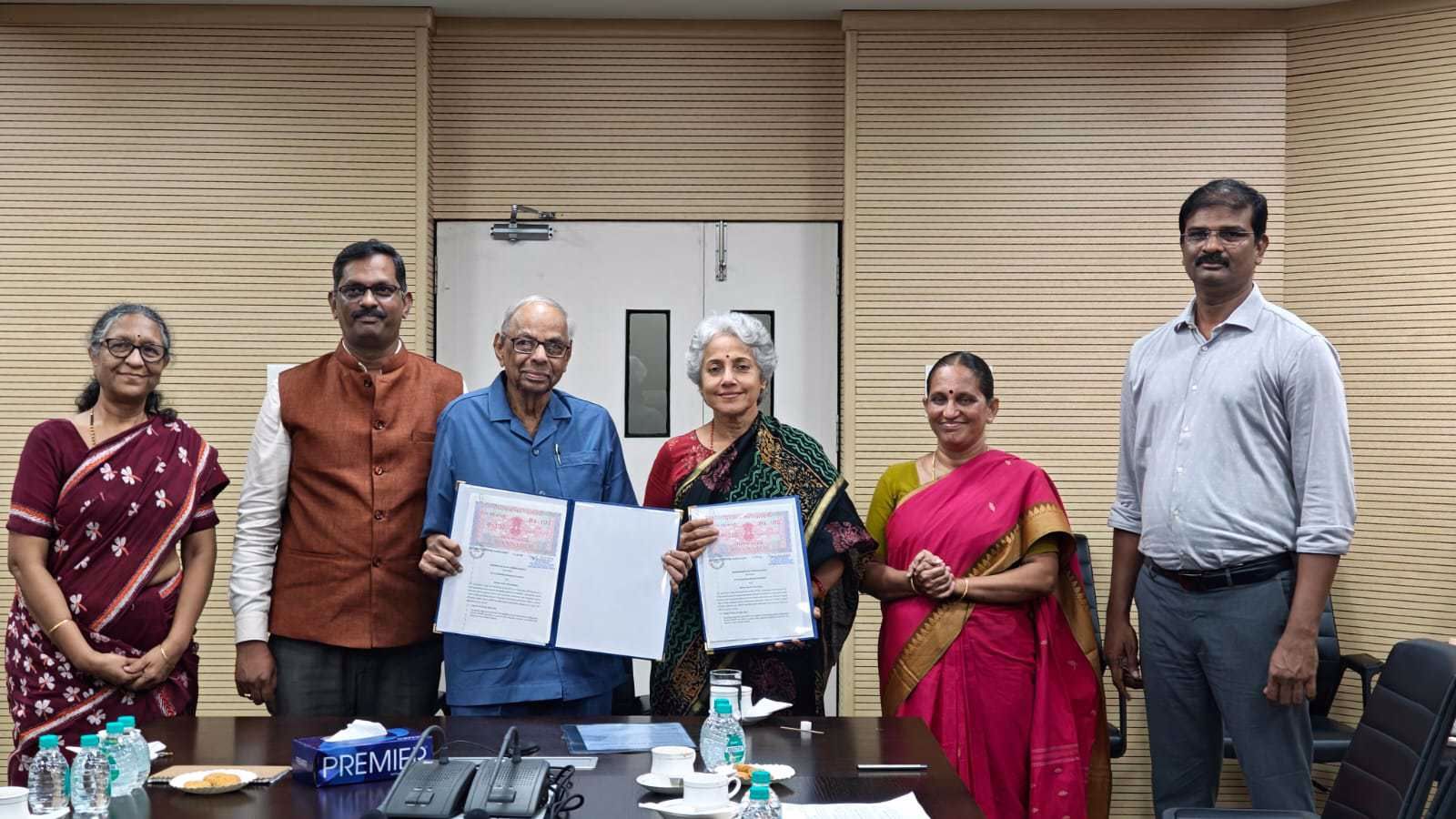
MSSRF and the Madras School of Economics (MSE) have signed a MoU to strengthen research at the intersection of climate science, nutrition, and economics. This collaboration aims to deliver evidence-based policy solutions while enhancing student engagement. By integrating economic perspectives with nutrition and biodiversity research, the partnership seeks to support India’s food systems transformation. The MoU was signed by Dr. Soumya Swaminathan, Chairperson, MSSRF, Dr. C Rangarajan, Chairman, MSE, Dr. Rengalakshmi Raj, Executive Director, MSSRF, Dr. Bhanumurthy N R, Director, MSE, and Dr R Gopinath, Principal Scientist, MSSRF, in the presence of faculty and students in November.
|
|
|---|
|
|
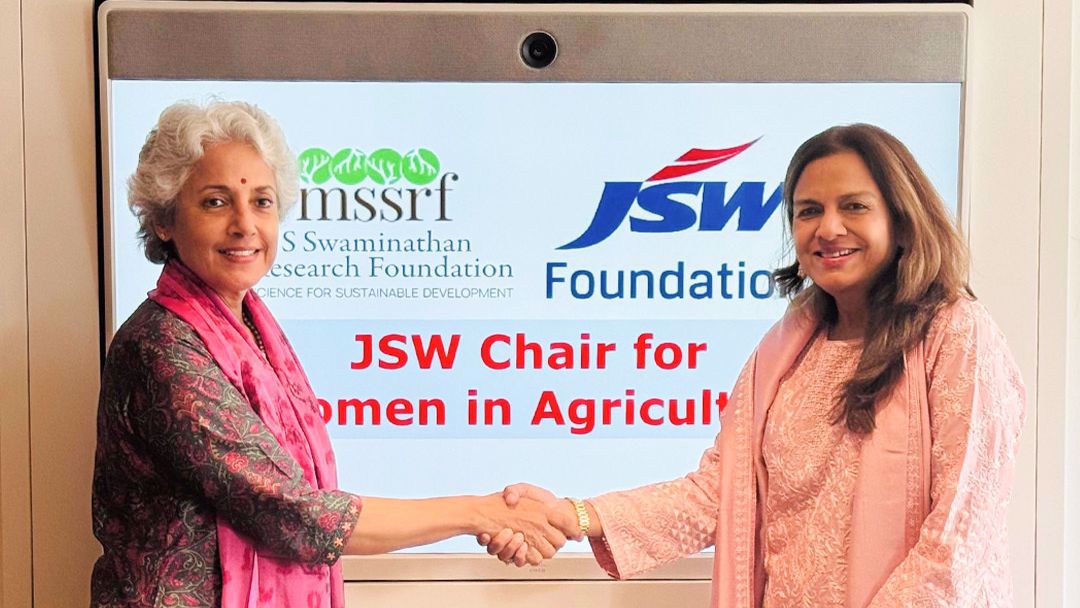
MSSRF–JSW Foundation MoU to Establish Chair for Women in Agriculture
Established in the presence of Mrs. Sangita Jindal, Chairperson of JSW Foundation, and Dr. Soumya Swaminathan, Chairperson, MSSRF, this collaboration seeks to bridge this gap by enhancing incomes, strengthening agency, and driving reforms that recognise women farmers as equal contributors to our food systems. The JSW Chair for Women in Agriculture at MSSRF will develop models to improve women farmers’ income and strengthen their role in farm and household-level decision-making, while also informing policy and legislative reforms to secure their entitlements.
|
|
|---|
|
|
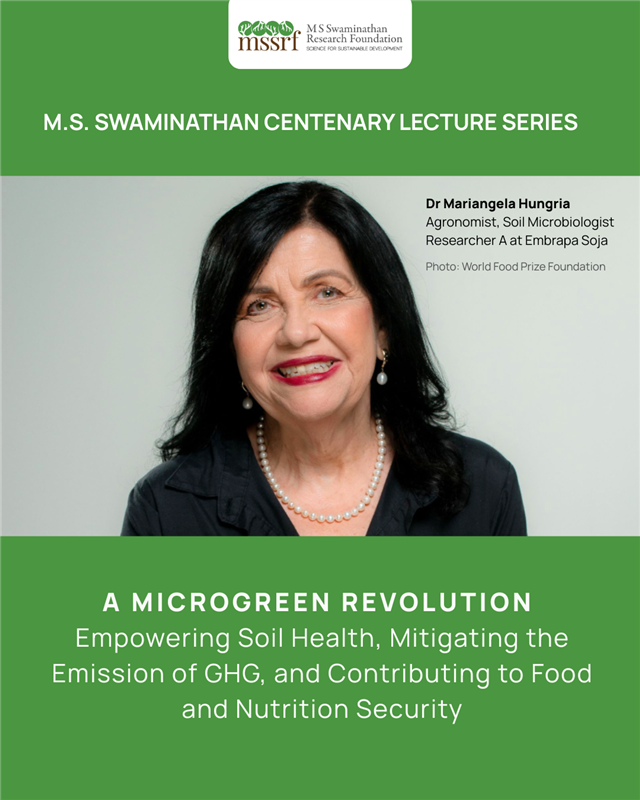
World Food Prize Recipient Dr Mariangela Hungria Delivers Closing Lecture of M.S. Swaminathan Centenary Series
Conceived in 2024 to honour the late Prof. M.S. Swaminathan’s scientific vision during his birth centenary, the M.S. Swaminathan Centenary Lecture Series hosted 13 lectures by globally renowned scientists, researchers and thought leaders.
The concluding lecture was held on 5 December 2025 by Dr. Mariangela Hungria, a renowned agronomist and World Food Prize Laureate. She brought attention to the MicroGreen Revolution and unpacked her groundbreaking work with nitrogen-fixing bacteria in soybeans.
|
|
|
|
|
Dr. Soumya Swaminathan Joins Azim Premji University’s Public Health Lecture Series
How does scientific evidence shape strategic public health programs and policies at local, national, and global levels of governance? In 'Evidence in Public Health Policies: Insights and Lessons from Policy Practice,' Dr. Soumya Swaminathan, former Chief WHO Scientist and global public health expert, draws from her experience across levels of policymaking to share critical insights on building stronger evidence-informed public health practices.
|
|
|
|
|
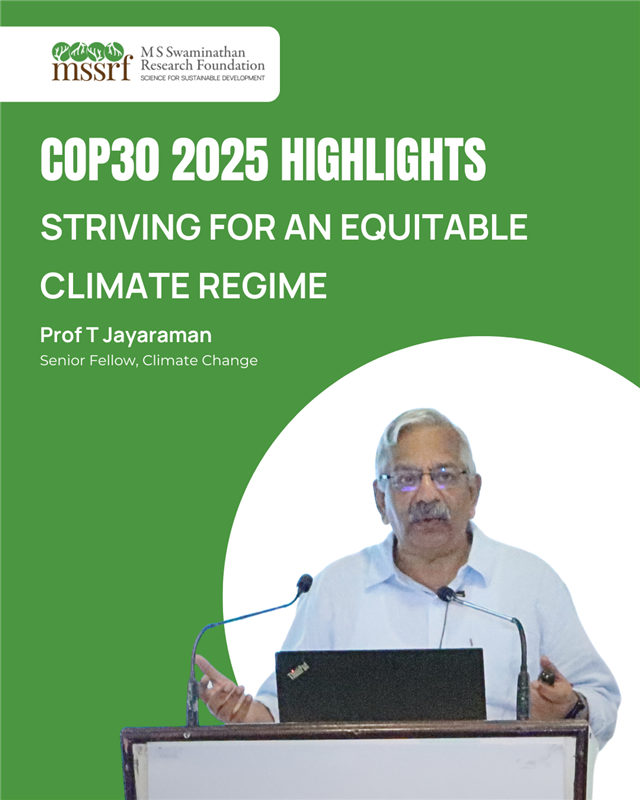
COP30 from the Global South lens
Prof Thiagarajan Jayaraman, Senior Fellow, Climate Change at MSSRF, talks about the equity gaps, lack of climate finance, access to technology, adaptation urgency, and the burden of meeting energy and development needs in the face of a rapidly shrinking carbon budget.
|
|
|
|
|
|
M. S. Swaminathan Research Foundation 3rd Cross Street, Taramani Institutional Area, Chennai - 600113. Tamil Nadu, India
|
|
|---|
|
|
| |
|
|